3 October 2026
AD Ports Group completed the largest acquisition in its history on 2 October 2026: it closed the purchase of Corredor Logística e Infraestrutura (CLI), Brazil’s leading independent agri-bulk port terminal operator, at an enterprise value of AED 3.1 billion (USD 835 million). The deal gives the Abu Dhabi group two export terminals in the ports of Santos and Itaqui, which handled 17 million tonnes of agricultural cargo in 2025, and its first foothold in South America. AD Ports says it now intends to set up direct trade routes from Brazil to Khalifa Port and the Abu Dhabi Food Hub in KEZAD.
What closed on 2 October
The transaction was first announced on 2 June 2026, with completion expected in the second half of the year. According to the AD Ports Group release of 2 October, the financial closing took place after the customary conditions were met, including approvals from two Brazilian regulators: the National Waterway Transportation Agency (ANTAQ) and the competition authority, the Administrative Council for Economic Defense (CADE).
The sellers were funds managed by Macquarie Asset Management and IG4 Capital. AD Ports Group, listed on the Abu Dhabi Securities Exchange (ADX: ADPORTS), takes operational control of CLI through Noatum Ports, its international ports arm. Under the terms agreed in June, CLI’s existing senior management team stays in place to run the company. BTG Pactual advised AD Ports Group, and Citi advised the sellers.
Mohammed Al Tamimi, Chief Executive Officer of Noatum Ports, said the group is committed to “quickly integrating CLI into our existing global operations”.
What CLI brings: two terminals and 17 million tonnes
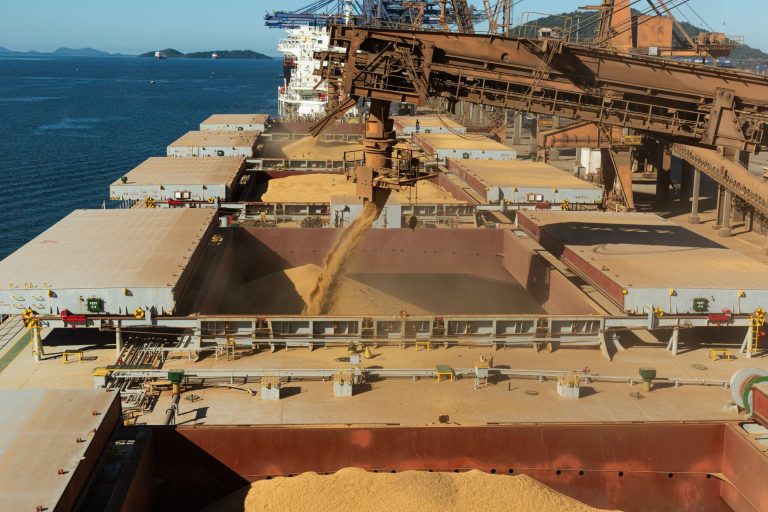
São Paulo based CLI runs two agri-bulk export terminals under long-term concessions:
- CLI Sul, Port of Santos. Described by AD Ports as Brazil’s leading sugar export terminal, it also ships corn and soybeans. CLI owns 80% of CLI Sul.
- CLI Norte, Port of Itaqui. A grain gateway in the “Arc of the North”, the corridor of northern ports that serves agricultural exports from the Amazon basin region. CLI owns 100% of CLI Norte.
In 2025 the two terminals handled a combined 17 million tonnes of agri-bulk cargo. CLI reported revenue of AED 654 million (USD 178 million) and EBITDA of AED 360 million (USD 98 million) for the year. The group’s June release notes that Brazil accounts for 40% to 50% of global sugar exports, according to industry figures, and is a leading exporter of soybeans, coffee and corn.
The largest deal in AD Ports history
At AED 3.1 billion, CLI is now the biggest acquisition AD Ports Group has made. The two previous benchmarks were the purchase of Spanish logistics company Noatum and the first stake in Dubai based Global Feeder Shipping (GFS).
| Deal | Year | Value |
|---|---|---|
| CLI, Brazil (agri-bulk terminals in Santos and Itaqui) | 2026 | AED 3.1 billion (enterprise value) |
| Noatum, Spain (logistics) | 2023 | AED 2.65 billion |
| Global Feeder Shipping, Dubai (51% stake) | 2024 | AED 1.9 billion |
Gulf Business adds that AD Ports raised its holding in Global Feeder Shipping to 81% in June 2026 by buying a further 30% for AED 1.1 billion.
A planned corridor: Brazil to Khalifa Port and KEZAD
The practical link to the UAE is the trade route the group wants to build. With the transaction completed, AD Ports Group says it intends to establish new routes directly connecting Brazil with Khalifa Port and the Abu Dhabi Food Hub in KEZAD, which it calls the largest food hub in the region, to move Brazilian agricultural commodities into regional and international markets.
The wider plan is an East-West trade spoke from South America to the Indian Subcontinent, East Africa and Southeast Asia, using the group’s ports, shipping, logistics, economic cities and digital trade services. No launch date, schedule or tariff for the new routes has been published yet.
The June announcement also placed the deal in the context of UAE and Brazil relations. At that time the UAE was in advanced negotiations with Mercosur, the South American trade bloc that includes Brazil, on a Comprehensive Economic Partnership Agreement. The two countries have signed a double taxation agreement, and Emirati investment in Brazil is estimated at about USD 5 billion, according to the UAE Ministry of Foreign Affairs.
Part of a wider agrifood strategy
Agrifood is one of the priority verticals in the AD Ports Group expansion strategy. Recent steps listed by the group include:
- December 2025: an agreement between Karachi Gateway Multipurpose Terminal and the Pakistan unit of Louis Dreyfus Company to develop a clean bulk facility for agricultural goods at Karachi Port.
- January 2025: an investment of about USD 30 million in the greenfield Sarzha Grain Terminal at Kuryk Port on the Caspian Sea, Kazakhstan.
- 2026: a 30-year concession for the Aqaba multipurpose port in Jordan, which handles over 3 million tonnes of grain a year.
- Spain: the Noatum Ports terminals in Tarragona and Sagunto handle about 2 million tonnes of grain imports a year, with AED 90 million (EUR 21 million) committed to modernising Tarragona.
What this means for companies in the UAE
The closing itself does not change any rule, fee or procedure for businesses in the UAE. What it changes is ownership: an Abu Dhabi group now controls terminals at both ends of a potential Brazil to UAE grain and sugar route. For food traders, commodity importers and processors that already buy Brazilian sugar, corn or soybeans, a practical checklist looks like this:
- Check that your licence covers the right activities, for example foodstuff, grain or sugar trading, and whether you need a mainland or free zone structure for the markets you sell into. Our guide mainland vs free zone company in the UAE compares the two.
- Register your company with customs to obtain an importer code before the first shipment arrives at Khalifa Port.
- Food imports into Abu Dhabi are regulated by the Abu Dhabi Agriculture and Food Safety Authority (ADAFSA), so check product registration and labelling requirements in advance.
- If you plan storage or processing near the port, compare the options in KEZAD, where JD.com is also building a logistics hub, see our article on the 150,000 sq m JD.com hub at KEZAD.
- Watch for the announcement of the actual routes: AD Ports has stated the intention but has not published schedules or rates.
How Atlant Capital can help
Atlant Capital helps entrepreneurs set up trading and logistics companies in the UAE, on the mainland or in a free zone. We select the licence activities for food and commodity trading, prepare the documents and take the application through to the issued licence with our company setup service. After registration we help open a corporate bank account for payments to foreign suppliers and arrange residence visas for founders and staff.
Conclusion
On 2 October 2026 AD Ports Group closed its AED 3.1 billion acquisition of Brazilian terminal operator CLI after approvals from ANTAQ and CADE. The deal adds two terminals in Santos and Itaqui that handled 17 million tonnes in 2025 and generated AED 654 million in revenue. The group plans direct routes from Brazil to Khalifa Port and the Abu Dhabi Food Hub in KEZAD, but dates and rates have not yet been announced.
Source: Gulf Business, AD Ports Group.
FAQ
How much did AD Ports pay for Brazil’s CLI?
AD Ports Group acquired Corredor Logística e Infraestrutura (CLI) at an enterprise value of AED 3.1 billion (USD 835 million). The deal was announced on 2 June 2026 and completed on 2 October 2026. It is the largest acquisition in the group’s history, ahead of the AED 2.65 billion purchase of Noatum in 2023.
Which ports does CLI operate in Brazil?
CLI operates two agri-bulk export terminals under long-term concessions: CLI Sul at the Port of Santos, a leading sugar export terminal that also handles corn and soybeans, and CLI Norte at the Port of Itaqui in the Arc of the North corridor. Together they handled 17 million tonnes of cargo in 2025.
Will there be a direct shipping route from Brazil to Abu Dhabi?
AD Ports Group says it intends to establish new trade routes directly connecting Brazil with Khalifa Port and the Abu Dhabi Food Hub in KEZAD. As of 3 October 2026 no schedule, launch date or tariff for these routes has been published.
Who approved the AD Ports and CLI deal?
The deal was approved by two Brazilian regulators: the National Waterway Transportation Agency (ANTAQ) and the Administrative Council for Economic Defense (CADE), the competition authority. The sellers were funds managed by Macquarie Asset Management and IG4 Capital.