20 September 2026
Travel and tourism contributed about AED 251.3 billion to the UAE economy in 2025, up 3 percent on 2024 and more than 22.2 percent above the 2019 level. International visitors accounted for around AED 209 billion of that total. The figures were presented to the UAE Tourism Council at a meeting chaired by Abdulla Bin Touq Al Marri, Minister of Economy and Tourism, and attended by the heads of the local tourism authorities. They are the baseline the country now measures itself against under the National Tourism Strategy 2031.
The numbers the Council reported
Two figures carry the story. The first is the total contribution of the travel and tourism sector, AED 251.3 billion for 2025. The second is spending by international visitors, about AED 209 billion, which is roughly 83 percent of the total by our calculation. In other words, the sector is driven overwhelmingly by money brought into the country from outside, not by domestic circulation.
The growth rate deserves attention as much as the level. A 3 percent increase on 2024 is steady rather than explosive, and it sits on top of a much larger jump that already happened: the 2025 result is more than 22.2 percent above 2019. The recovery phase is finished, and the sector has moved into normal growth.
| Indicator | Value |
|---|---|
| Travel and tourism contribution to the UAE economy, 2025 | AED 251.3 billion |
| Growth on 2024 | 3 percent |
| Level against 2019 | more than 22.2 percent higher |
| International visitor spending, 2025 | about AED 209 billion |
| Target contribution by 2031 | AED 450 billion |
| Target new tourism investment by 2031 | AED 100 billion |
| Target annual hotel guests by 2031 | 40 million |
What the 2031 target implies
The National Tourism Strategy 2031 sets the sector contribution at AED 450 billion, new tourism investment at AED 100 billion and annual hotel guests at 40 million. Against the 2025 baseline of AED 251.3 billion, reaching the target means adding a further AED 198.7 billion, close to 79 percent above where the sector stands today.
That gap is the reason the Council meeting was not only about reporting results. Growth of 3 percent a year does not close a 79 percent gap in six years, so the agenda moved straight to where additional capacity and additional visitor spending are supposed to come from: nature based tourism, coastal tourism and destinations outside Dubai and Abu Dhabi.
Al Marri framed it in terms of product range rather than volume. “We are committed to diversifying tourism products and developing innovative solutions to enhance the country’s appeal to visitors and reinforce its regional and global leadership,” he said, adding that the direction aligns with the National Tourism Strategy 2031.
Ecotourism policy to be finalised within 30 days
The Council discussed how to support the recently announced National Ecotourism Policy, which aims to balance the economic return from tourism against the protection of ecosystems and natural resources. Two numbers were cited as the base the policy is built on: 55 nature reserves across the country, and 4,900 hectares of desert, mountain and coastal land already rehabilitated.
The concrete decision was procedural but dated. The Council agreed to complete its review of the policy within 30 days, and to do so by selecting one flagship experience from each emirate. That means seven named nature or coast based products, one per emirate, rather than a general commitment to sustainability.
A single national safety standard for coastal areas
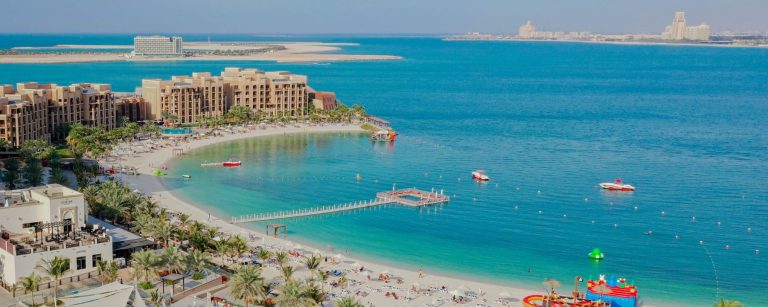
Members also discussed creating a unified national safety standard covering beaches, waterfronts and marine activities. The stated purpose is to protect visitors and the reputation of the destination while coastal and nature based tourism expands.
No text, scope or commencement date has been published, so nothing changes for operators today. For anyone running marine tours, water sports, beach clubs or charter services, this is the item worth tracking: a national standard, once issued, would apply across all seven emirates rather than emirate by emirate.
Tourism beyond the big cities
The third strand of the agenda was geographic. The Council discussed developing tourism outside the major cities, working with the UAE Villages project in coordination with the UAE Council for Balanced Development, and drawing on the UN Tourism Best Tourism Villages programme.
The intended mechanism is identification and packaging: pick emerging tourism villages and destinations, document what distinguishes them, build tourism content around them and bring them into the national tourism system. This is the same logic visible in the regional forecast of USD 408 billion in visitor spending by 2030, where growth comes from spending per visitor rather than from arrivals alone.
What this means for companies in the UAE
A set of published statistics is not a regulation, and nothing became mandatory at this meeting. What changed is the planning picture for any business whose revenue depends on visitors. Practical points:
- the market is large and growing slowly, not explosively, at AED 251.3 billion and 3 percent a year, so plans built on double digit sector growth are not supported by the 2025 data;
- about 83 percent of sector value comes from international visitors, which makes foreign demand, source market mix and currency exposure the variables that matter;
- the stated growth direction is ecotourism, coastal products and destinations outside Dubai and Abu Dhabi, which is where public support and promotion are being pointed;
- a unified coastal safety standard is under discussion, so operators in marine and beach activities should expect a compliance layer that does not exist yet;
- tourism facing work in the UAE is licensed activity by activity, and the licence has to match what is actually sold, whether that is tour operation, event management, hospitality, marine transport or retail;
- seven flagship experiences, one per emirate, are due to be named within 30 days of the meeting, which is a short and checkable deadline.
How Atlant Capital can help
Most of the practical work here is licensing and structure rather than marketing. If you are entering the tourism economy in the UAE, the first question is which activity codes your licence has to carry, because tour operation, travel agency work, event management, marine activity and hospitality are separate activities with separate approvals. We handle company setup in the mainland and in free zones and match the activity list to what the business will actually sell, which avoids the common outcome of a licence that does not cover half the revenue.
Visitor facing businesses also need a working banking setup from day one, because seasonal cash flow and card acquiring do not tolerate a three month account opening. We run corporate account opening in parallel with incorporation rather than after it. If you are still deciding between mainland and a free zone for a tourism business, our guide to company formation in the UAE sets out the difference in activity scope, ownership and cost, and residence visas for founders and staff are covered under work visas and residency.
Conclusion
The UAE tourism sector produced AED 251.3 billion in 2025, with AED 209 billion of it brought in by international visitors, and it is growing at 3 percent a year against a 2031 target of AED 450 billion. The gap between those two numbers explains the rest of the agenda: an ecotourism policy to be finalised within 30 days with one flagship experience per emirate, a proposed national coastal safety standard, and a push into destinations beyond the two largest cities. For operators, the signal is where the next licences, approvals and promotion budgets will be pointed.
Source: Khaleej Times, Gulf News.
FAQ
How much did tourism contribute to the UAE economy in 2025?
Travel and tourism contributed about AED 251.3 billion to the UAE economy in 2025, according to figures presented to the UAE Tourism Council. That is 3 percent more than in 2024 and more than 22.2 percent above the 2019 level. The figures were reported at a Council meeting chaired by Abdulla Bin Touq Al Marri, Minister of Economy and Tourism.
How much did international tourists spend in the UAE in 2025?
International visitor spending reached about AED 209 billion in 2025. That is roughly 83 percent of the total AED 251.3 billion contribution of the travel and tourism sector, which means the sector depends mainly on money brought into the country by foreign visitors rather than on domestic tourism.
What are the targets of the UAE National Tourism Strategy 2031?
The strategy targets a tourism sector contribution of AED 450 billion to GDP, AED 100 billion in new tourism investment and 40 million hotel guests a year by 2031. Measured against the 2025 result of AED 251.3 billion, the sector has to add a further AED 198.7 billion, close to 79 percent, over six years.
What is the UAE National Ecotourism Policy?
It is a national policy aimed at promoting sustainable practices in tourism and balancing economic returns against the protection of ecosystems. It builds on 55 nature reserves and 4,900 hectares of rehabilitated desert, mountain and coastal areas. The Tourism Council agreed to finalise its review of the policy within 30 days by selecting one flagship experience from each emirate.