21 September 2026
Eagle Hills, the Abu Dhabi developer founded by Mohamed Alabbar, signed a commercial terms agreement with the Government of the Maldives in Dubai on Monday, 21 September 2026, for an integrated destination called Maldives Waterfront and Marina. The company puts direct investment at USD 12 billion across phases. The Maldivian side frames the wider programme at around USD 20 billion and expects more than USD 11 billion in state revenue from it. At maturity the project is projected to support more than 54,000 direct and indirect jobs, draw more than 1 million visitors a year and generate more than USD 2 billion a year in tourism revenue. Property will be sold on leasehold of up to 99 years, with a fresh term of up to 99 years starting on every transfer.
What was signed, and by whom
The document is a commercial terms agreement, not a construction contract. It was signed by Mohamed Alabbar, founder and chairman of Eagle Hills, and Dr Abdulla Muththalib, the Maldivian Minister of Infrastructure, Housing and Urban Development. The venue was Dubai, which matters for how this deal is read: the capital, the developer and the signing all sit in the UAE, while the asset sits 3,000 kilometres away.
Financing structure, construction timeline and the size of Eagle Hills own capital commitment were not disclosed. That is normal at commercial terms stage and it is the first thing any contractor or supplier reading this announcement should note before planning around it.
Where the project goes
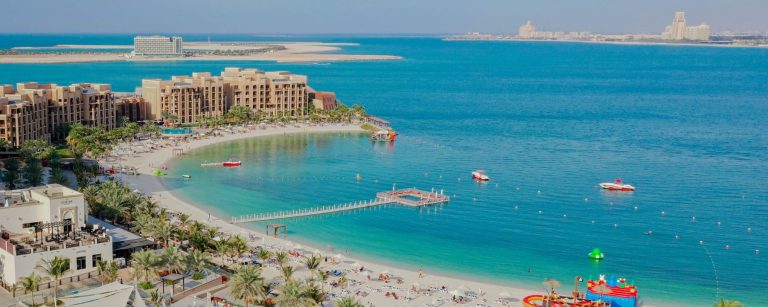
Maldives Waterfront and Marina will be built at Ras Male, a new urban area taking shape on the Fushi Dhiggaru Lagoon close to the capital, Male, roughly 17 minutes away by speedboat. The site covers about 500 hectares of land that has already been reclaimed. Eagle Hills has said it will not carry out further dredging and that independent marine monitoring will run alongside construction.
The programme covers international hotels and resorts, premium and branded residences, a marina, waterfront promenades, restaurants and shops, leisure and wellness centres, plus education and healthcare facilities and public space. In other words it is a district, not a resort, and that is the format Eagle Hills has been exporting since 2014.
The numbers behind the headline
Four different figures are circulating, and they measure different things. Keeping them apart is the difference between reading this deal correctly and repeating a number out of context.
| Figure | What it actually measures |
|---|---|
| USD 12 billion | Direct investment in the development across its phases, the figure in the Eagle Hills announcement |
| About USD 20 billion | The overall investment programme across phases as framed by the Maldivian government |
| More than USD 30 billion | Preliminary estimate of gross foreign investment attracted over the lifetime of the project |
| About USD 18 billion | Net foreign investment expected to land in the Maldives over that lifetime |
| More than USD 11 billion | State revenue the Maldivian government expects to receive |
The Maldivian minister was explicit about how that state revenue arrives. There are no tax concessions for the Ras Male project and no government borrowing behind it: the state is paid directly out of sales. He described the programme as the largest in the country history, with billions of dollars of foreign investment moving through the Maldivian banking system.
A 99 year leasehold that restarts on every transfer
Ownership is the technical core of the deal. Under Maldivian law the units will be offered on long term leasehold of up to 99 years, and a new term of up to 99 years begins on each transfer, whether the unit is sold or inherited. That mechanism is what makes a leasehold product tradable over generations rather than a depreciating clock, and it is the clause that will decide whether international buyers treat these residences as an asset class.
Anyone comparing this with the UAE should note the difference in kind. In Dubai, foreign buyers hold freehold title in designated areas. In the Maldives the instrument is leasehold with renewal on transfer. Both are workable, and they are not the same thing, so a UAE resident weighing the two is comparing different rights, not just different prices. The financing side differs as well: our guide to mortgages in the UAE for residents and non residents sets out how lenders here treat down payments and eligibility, which is the benchmark most buyers will use.
A separate commitment on housing
Alongside the Ras Male agreement, Eagle Hills has committed to develop 5,000 housing units in Hulhumale. Minister Muththalib said the government will not carry any financial responsibility for those units and that the developer will work on a contractor finance model, recovering costs once the homes are developed, sold and handed over. That is a separate obligation from the waterfront district and it is the part of the package aimed at Maldivian families rather than international buyers.
Why an Abu Dhabi developer is building a city abroad
Eagle Hills was set up in Abu Dhabi in 2014 by Mohamed Alabbar, the founder of Emaar Properties and the developer behind Downtown Dubai. Its portfolio is deliberately international: Belgrade Waterfront in Serbia, Marassi Al Bahrain in Bahrain, Saraya Aqaba in Jordan, projects in Ethiopia and Oman, and a mixed use redevelopment in Rome. The company builds districts in markets that want a destination built from the ground up and do not have a domestic developer able to deliver one.
That is the pattern worth watching from the UAE. Over the past decade the country moved from importing development expertise to exporting it, and the counterparties are now sovereign governments rather than private landowners. A deal of this shape sends UAE capital, UAE contracting standards and a UAE sales model into another jurisdiction, and it brings the fee income and the supply chain back.
What this means for companies in the UAE
A project of this size does not stay inside one developer. It pulls in a supply chain, and most of that chain will be contracted out of the UAE.
- Marine works, piling, engineering, MEP, facade and fit out packages on a 500 hectare district are tendered over years, not months. Companies that want to bid usually need a UAE entity that can sign, invoice and be paid internationally.
- Contracts on this project will be denominated in US dollars. The dirham is pegged to the dollar, which removes currency risk on the revenue side for a UAE contractor and leaves it on costs paid in other currencies.
- Hospitality operators, retail brands, clinics and schools are all named components of the masterplan. Those are franchise and management agreements, and they are signed years before handover.
- A UAE company earning project income abroad has to decide how that income is treated at home. UAE corporate tax applies at 9 per cent on taxable income above AED 375,000, and the treatment of a foreign permanent establishment is an election a company makes deliberately, not a detail to discover afterwards.
- Getting paid matters as much as winning the work. A corporate account that handles USD flows to and from South Asia needs to be opened before the first invoice, not after it, which is why we treat corporate bank account opening as part of the same project as the licence.
- Choosing where the entity sits decides what it can contract for. Our guide to company formation in the UAE covers the mainland and free zone options and what each one allows on foreign contracts.
How Atlant Capital can help
We work with companies that operate out of the UAE into other markets, which is exactly the shape of the supply chain this project will create. That means setting up the entity with activities that match what you will actually be bidding for, opening a corporate account that can take dollar payments from outside the Gulf, putting residence visas on the people who have to travel, and keeping the licence, the accounting and the corporate tax registration in order while the work runs.
If you are looking at contracts on projects like this one, start with the structure. Company setup in the UAE is the step that determines what you can sign, where you can bank and how the income is taxed, and it is much cheaper to get right at the start than to restructure once a tender is live.
The bottom line
An Abu Dhabi developer has committed USD 12 billion of direct investment to a district in the Maldives, with a wider programme the host government values at around USD 20 billion and expects to generate more than USD 11 billion in state revenue, 54,000 jobs and 1 million visitors a year. The financing and the timeline are not public yet. What is public is the tenure model, the location, the components and the fact that the whole thing was signed in Dubai. For companies in the UAE, the relevant question is not whether the number is 12 or 20, but whether their entity is set up to work on a project of this kind when the tender packages come out.
Source: The National.
FAQ
How much is the Eagle Hills Maldives project worth?
Eagle Hills puts direct investment at USD 12 billion across the phases of Maldives Waterfront and Marina. The Maldivian government describes the overall investment programme as around USD 20 billion and expects to receive more than USD 11 billion in state revenue from it. Preliminary estimates put gross foreign investment attracted over the lifetime of the project above USD 30 billion, of which about USD 18 billion would be net foreign investment into the Maldives.
Where exactly will Maldives Waterfront and Marina be built?
At Ras Male, a new urban area on the Fushi Dhiggaru Lagoon near the capital, Male, about 17 minutes away by speedboat. The site covers roughly 500 hectares of already reclaimed land. Eagle Hills has stated that it will carry out no further dredging and that independent marine monitoring will accompany construction.
Can foreigners own property in the project?
Units will be offered under Maldivian law on long term leasehold of up to 99 years rather than freehold. A new term of up to 99 years begins on each transfer of the unit, whether by sale or by inheritance. That is different from freehold ownership in designated areas of Dubai, so buyers comparing the two are comparing different legal instruments.
Who signed the agreement and when?
The commercial terms agreement was signed in Dubai on Monday, 21 September 2026, by Mohamed Alabbar, founder and chairman of Eagle Hills, and Dr Abdulla Muththalib, the Maldivian Minister of Infrastructure, Housing and Urban Development. Financing details, the construction timeline and the developer own capital commitment were not disclosed.
What does the project mean for UAE companies?
The construction, engineering, hospitality, retail, education and healthcare packages on a 500 hectare district are contracted over several years, and much of that chain is procured out of the UAE. Companies that want to bid generally need a UAE entity with matching licensed activities, a corporate account able to receive US dollar payments from outside the Gulf, and a clear position on how foreign project income is treated under UAE corporate tax at 9 per cent above AED 375,000.