2026-10-17
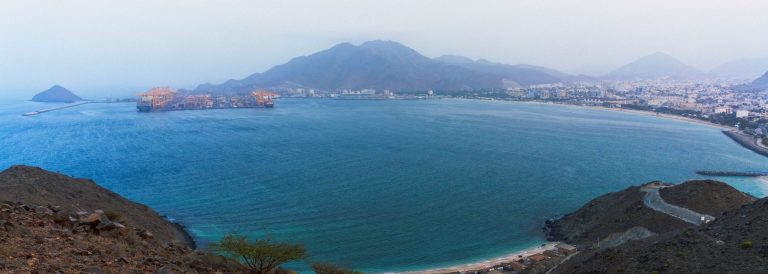
DP World says a vessel call at its planned terminals in Fujairah could cut sailing times on Indian Ocean services by three to five days, according to a company update reported by Gulf News on 16 October 2026. The two terminals, Al Rugaylat for containers and multi-purpose cargo and Dibba for general cargo, sit on the Gulf of Oman outside the Strait of Hormuz. Together they are designed for up to 2.5 million TEU, 5.3 million tonnes of general cargo and 190,000 car equivalent units a year, and they would lift DP World container capacity in the UAE from 19.4 million TEU to almost 22 million TEU. Construction has not started yet: DP World expects it to take about 24 to 30 months from commencement.
What DP World said this week
The new element is the time saving. In its latest social media update, quoted by Gulf News, DP World said: “Through our planned Fujairah terminals, a call on the UAE’s east coast could reduce sailing times on Indian Ocean services by up to five days.” The company added that a Fujairah call could improve schedule reliability and cost efficiency, and give cargo owners more flexibility over how goods enter and leave the UAE.
The logic is geographic. Fujairah faces the Indian Ocean directly. A vessel calling at any port inside the Arabian Gulf, Jebel Ali included, has to pass through the Strait of Hormuz on the way in and again on the way out. DP World says ships serving Indian Ocean trade routes could call at the UAE east coast without making the same routing choices as vessels using Gulf ports. The company did not publish a route by route breakdown of the three to five days, so the figure should be read as a DP World estimate for Indian Ocean services, not a guaranteed transit time.
The project in numbers
The terminals come from an agreement in principle that DP World reached with the Fujairah Ports Authority on 22 July 2026 under a 50-year concession. We covered that signing in detail in DP World’s 50-year concession for two Fujairah ports. The figures DP World has published so far:
| Item | Figure |
|---|---|
| Concession term | 50 years |
| Al Rugaylat containers | Up to 2.5 million TEU a year |
| Al Rugaylat general cargo | 1.7 million tonnes a year |
| Al Rugaylat vehicles | 190,000 CEU a year |
| Dibba general cargo | Up to 3.6 million tonnes a year |
| DP World UAE container capacity | 19.4 million TEU now, almost 22 million TEU after |
| Construction | About 24 to 30 months from start, in phases |
| Investment | Not disclosed |
Al Rugaylat is planned as a deep-water terminal able to handle the latest generation of ultra large container vessels. Almost all of the national capacity increase comes from its 2.5 million TEU. Dibba adds breakbulk and general cargo rather than boxes.
Linked to Jebel Ali and Jafza, not a replacement
DP World presents Fujairah as an extension of the Jebel Ali ecosystem. The new terminals are to be connected to Jebel Ali through the company’s inland logistics network and integrated with Jafza, so cargo can move between ports, logistics hubs and end markets across the UAE. “Fujairah strengthens what Jebel Ali already delivers,” Group CEO Yuvraj Narayan said when the project was announced in July. “With Jebel Ali operating at high utilisation, this development provides the additional capacity to support long-term growth.”
The east coast is already being tied into the national network from other directions. In September Etihad Rail Freight and AD Ports Group launched a direct rail freight service from Fujairah Terminals to ICAD in Abu Dhabi. That service runs from the existing AD Ports terminal at the Port of Fujairah, which is a separate facility from the two DP World projects.
Why DP World is pushing alternative routes now
DP World backed the announcement with its latest Global Trade Observatory survey of 103 chief supply chain officers across 14 markets and nine industries:
- 86% see access to alternative and multimodal trade routes as a competitive advantage.
- 84% say resilience and optionality have overtaken cost reduction as the main driver of supply chain strategy.
- 71% plan to diversify their supplier base over the following 12 months.
The company has also expanded its inland options. In August DP World said its GCC road and rail network had moved 500,000 TEU since March, with about 3,000 truck movements a day after it added 700 trucks. It is also promoting corridors into the GCC through Oman and Saudi Arabia that combine sea, road, rail and air freight. Gulf News links this push to disruption of established regional shipping routes amid the war between the US and Iran. Our earlier analysis of Hormuz disruption and UAE re-export flows covers how that affected traders, and the first reports of the Fujairah plan are in DP World’s port talks to bypass Hormuz.
What this means for companies in the UAE
Nothing changes in day to day shipping yet. The terminals are not built and there is no published opening date. What a trading business can do now is prepare its paperwork and planning for a second gateway:
- Freight contracts: check whether your sales and purchase contracts fix Jebel Ali as the only port of discharge, or allow another UAE port.
- Forwarders: ask your forwarder which Indian Ocean services already call at UAE east coast ports and what the inland leg to your warehouse costs today.
- Company structure: if you import through Jafza or plan to, the link to Fujairah will run through DP World’s own network, so the choice of free zone and licence activity matters. Our guide to mainland vs free zone companies in the UAE sets out the differences.
- Timeline: on DP World’s own estimate, even if construction began in late 2026, the 24 to 30 month build would end between late 2028 and 2029.
How Atlant Capital can help
Atlant Capital helps trading, logistics and e-commerce businesses set up in the UAE with the right structure for how their goods actually move. We compare free zone and mainland options for import, re-export and warehousing activity, prepare licence applications and the corporate documents that go with them. If you are planning a trading company or reviewing an existing one, see our company setup service or contact our team.
Conclusion
The three to five day estimate is the clearest statement yet of what DP World expects Fujairah to deliver: a UAE port call that does not depend on the Strait of Hormuz, linked by land to Jebel Ali and Jafza. The capacity figures are unchanged since July, the investment remains undisclosed and construction has not begun. For now, the useful step for businesses is to keep contracts and routing flexible enough to use a second gateway once it opens.
FAQ
How many days can DP World’s Fujairah terminals save on Indian Ocean routes?
DP World says a call at its planned Fujairah terminals could save three to five days of sailing time on Indian Ocean services. The company has not published a breakdown by route, so this is a DP World estimate rather than a fixed transit time.
What capacity will the new Fujairah terminals have?
Al Rugaylat is designed for up to 2.5 million TEU a year, 1.7 million tonnes of general cargo and 190,000 car equivalent units. Dibba adds up to 3.6 million tonnes of general cargo a year. DP World container capacity in the UAE would rise from 19.4 million TEU to almost 22 million TEU.
When will DP World’s Fujairah terminals open?
No opening date has been announced. DP World says construction will take about 24 to 30 months from commencement and will be delivered in phases, and as of 16 October 2026 construction had not started.
Will the Fujairah terminals replace Jebel Ali?
No. DP World describes the project as an extension of the Jebel Ali ecosystem. The terminals will be connected to Jebel Ali through its inland logistics network and integrated with the Jafza free zone, adding capacity while Jebel Ali runs at high utilisation.