2026-07-22
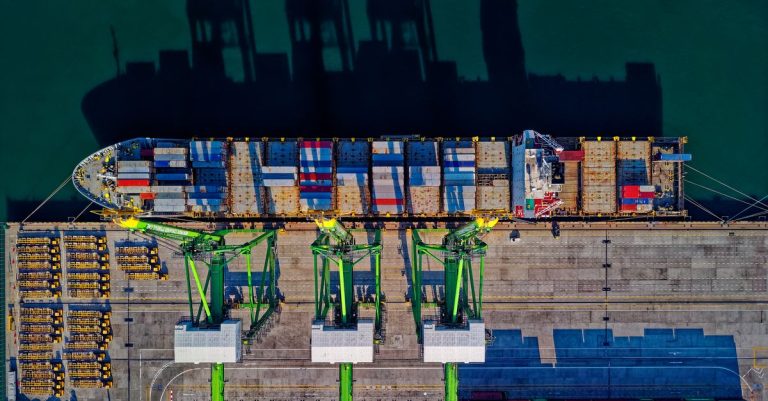
DP World and the Fujairah Ports Authority signed a 50-year concession agreement on 2026-07-22 to develop and operate two multipurpose ports on the east coast of the UAE: Al Rughailat and Dibba. Together the two facilities are designed to handle up to 2.5 million TEU of containers, 5.3 million tonnes of general cargo and 190,000 vehicles a year. The strategic point is geography. Both ports sit on the Arabian Sea, outside the Strait of Hormuz, which means cargo can reach the Emirates without passing through the chokepoint that carries most of the region's maritime trade. For companies importing, exporting or re-exporting through the UAE, this is the clearest signal yet that a second national gateway is being built, not just discussed.
What was signed
The concession runs for 50 years and covers Al Rughailat Port (also transliterated as Al Rughayalat) and Dibba Al Fujairah Port. The agreement was signed in the presence of Sheikh Mohammed bin Hamad bin Mohammed Al Sharqi, Crown Prince of Fujairah. Essa Kazim, Chairman of the DP World Board of Directors, signed for the operator, and Mousa Murad, Managing Director of the Fujairah Ports Authority, signed for the emirate. Sheikh Saleh bin Mohamed Al Sharqi chairs the Fujairah Ports Authority.
No investment figure was disclosed, and companies planning around this should treat the capital cost as unpublished rather than estimate it. What was disclosed is the operating scope, and that is the part suppliers and shippers can actually plan against.
The capacity numbers
The two ports are being developed for different cargo profiles, which is why they are worth reading separately:
- Al Rughailat: up to 2.5 million TEU of container throughput a year, 1.7 million tonnes of general cargo, and 190,000 car equivalent units. This is the container and automotive port of the pair.
- Dibba: up to 3.6 million tonnes of general cargo a year. Breakbulk, project cargo and bulk commodities rather than boxes.
- National effect: once both are running, total UAE container capacity is reported to rise to roughly 22 million TEU, against about 19.4 million today.
- Build time: 24 to 30 months from the start of construction, which places first operations in the 2028 to 2029 window if work begins promptly.
A 190,000-unit vehicle capability is the detail most trade businesses will underrate. Car handling requires dedicated ro-ro berths and yard space, and the UAE re-export trade in vehicles to East Africa, Central Asia and the CIS has been running against constrained capacity in Dubai for years. A second vehicle gateway changes the arithmetic for that specific trade.
Why the east coast matters
Roughly a fifth of the world's seaborne oil and a large share of container traffic serving the Gulf passes through the Strait of Hormuz. Every port inside the Gulf, including Jebel Ali, depends on that passage staying open and insurable. Freight and war-risk premiums on Gulf transits have been a live commercial issue through 2026, and shippers have been repricing routes accordingly. We covered the trade and re-export consequences in our analysis of Hormuz disruption and UAE re-export flows.
Fujairah sits on the other side of the peninsula. A container discharged at Al Rughailat never enters the Gulf: it moves inland by road to Dubai, Abu Dhabi and Sharjah over a distance short enough to be a same-day trucking leg. That is the whole logic of the project. The UAE is not replacing Jebel Ali, which remains the country's principal container hub and runs at high utilisation. It is adding a parallel entry point that is insulated from a single geopolitical variable.
This also completes a story we reported earlier. In July 2026 DP World was reported to be in talks over a Fujairah port and container terminal. Those talks have now produced a signed 50-year concession, which moves the project from press speculation to a contractual commitment.
What this means for business in the UAE
Four practical consequences are worth separating.
Supply chain resilience becomes a documentable feature. Buyers, insurers and lenders increasingly ask importers how their route survives a Hormuz interruption. From 2028 to 2029 the honest answer for UAE-based traders can include a physical alternative on the Arabian Sea rather than a contingency clause on paper.
Landed cost may shift by route, not by tariff. Insurance, bunker surcharges and waiting time drive a meaningful share of landed cost on Gulf routes. A route that avoids the strait carries a different risk premium. Companies with thin margins on high-volume goods should model both entry points once schedules are published rather than assume Jebel Ali pricing holds everywhere.
Contracting and services demand in Fujairah. Two greenfield port developments over a 24 to 30 month build generate marine works, civil construction, equipment supply, inspection, staffing, warehousing, customs brokerage and transport subcontracting. The prime contracts go to large consortiums, but second and third-tier work is open to properly licensed local companies that are prequalified as vendors in advance. Prequalification is paperwork, and paperwork takes lead time.
Warehousing and land economics on the east coast. Ports create hinterland. Fujairah has cheaper industrial land than Dubai and an existing free zone. Trading and light manufacturing businesses that do not need a Dubai address for client-facing reasons will find the cost comparison worth running.
How to position for it
Companies that want exposure to this corridor typically need to get a small number of structural things right. A practical checklist:
- Confirm that your licence actually covers the activities you intend to run: trading, logistics services, freight forwarding, customs clearance and warehousing are separate activity codes, and adding one later is an amendment, not a formality.
- Decide between mainland and free zone on the basis of who your customers are, since selling into the UAE domestic market from a free zone requires a mainland distributor or a dual structure.
- Register with the relevant customs authority and obtain an importer or exporter code before your first shipment, not during it.
- Open a corporate bank account early, because trade finance, letters of credit and supplier guarantees depend on a functioning banking relationship rather than on the company licence alone.
- Check whether your goods require third-party approvals, which is common for food, cosmetics, medical devices, chemicals and telecom equipment.
- Keep corporate tax and VAT registration current, since 9 per cent corporate tax and 5 per cent VAT apply to trading businesses subject to the usual thresholds and free zone qualifying-income rules.
If your business is being built specifically around import, export and customs flows, our guide to setting up an import and export company in Dubai covers the licensing and customs sequence in detail.
How Atlant Capital can help
We work with trading, logistics and industrial companies that need a structure in the UAE fit for real cargo flows rather than a nameplate. That covers choosing between mainland and free zone, selecting the correct activity codes, and completing company registration in the UAE without the amendments that come from a rushed initial choice. We handle customs registration, VAT and corporate tax registration, and residence visas for founders and staff.
We also support corporate bank account opening, which remains the step where trade-oriented companies most often lose weeks, because compliance teams assess the trade route, the counterparties and the source of funds, not just the licence. Preparing that file properly before submission is usually the difference between two weeks and two months.
Conclusion
A 50-year concession is a long commitment, and the operating numbers behind it are specific: 2.5 million TEU, 5.3 million tonnes of general cargo and 190,000 vehicles a year across two ports on the Arabian Sea, with construction running 24 to 30 months. The investment total was not published, and no one should plan against a figure that has not been disclosed. What is now certain is the direction. The UAE is building a second maritime front door outside the Strait of Hormuz, and companies whose cost base depends on how cargo enters the country have roughly two years to decide how they will use it. Talk to us if you want that decision mapped against your own structure.