06 July 2026
Dubai Customs has highlighted a strategic logistics bridge operated in partnership with Emirates SkyCargo to support the continuous flow of goods through Dubai’s air cargo infrastructure. The operations connected Dubai International Airport Cargo Village and Al Maktoum International Airport Air Cargo Centre, supporting the movement of essential goods including food products, pharmaceutical preparations and general merchandise.
For business owners, this is more than a logistics update. It confirms Dubai’s role as a regional and global trade hub – and shows why entrepreneurs who want to open an import/export, trading, logistics, food trading or pharma-related company in Dubai need to structure the business correctly from the beginning.
Dubai as a trade and logistics hub
Dubai has built its economy around connectivity: ports, airports, free zones, customs systems, re-export routes, logistics providers and access to regional markets. For many companies, Dubai is not only a place to sell goods inside the UAE. It is a platform for sourcing, storing, repackaging, distributing and re-exporting products across the GCC, Africa, Asia and Europe.
The partnership between Dubai Customs and Emirates SkyCargo reflects this wider strategy. Air cargo is particularly important for time-sensitive, high-value or regulated goods such as pharmaceuticals, perishable food, spare parts, electronics, medical items and urgent commercial shipments.
For founders, this creates opportunities. But it also means that company setup must be aligned with the real trade model, not only with the cheapest licence package.
Why licence activity matters for import/export companies
A trading company in Dubai should have a licence activity that matches the products and commercial model. A general trading activity may work for some businesses, but other products may require more specific activities, additional approvals or compliance steps.
For example, food trading, medical products, pharmaceuticals, cosmetics, supplements, chemicals, electronics or automotive spare parts may involve different regulatory considerations. The company may also need to think about product registration, customs codes, labelling, storage, temperature control, certifications, import permits or municipality approvals.
If the activity is selected incorrectly, the company may face delays with banking, customs registration, supplier onboarding, client contracts or future approvals.
Free zone or mainland for import/export business?
One of the first questions entrepreneurs ask is whether to open a company in a UAE free zone or on the mainland. The correct answer depends on how the business will actually operate.
A free zone company can be suitable for international trading, re-export, B2B activity, regional management, holding, logistics coordination or trading outside the UAE local market. Some free zones also offer strong links to ports, airports, warehouses and specialised trade ecosystems.
A mainland company may be more practical if the business plans to sell directly into the UAE local market, work with local retailers, supply government or semi-government entities, open a physical shop, maintain local warehouses or conduct wider commercial activity across the UAE.
In some cases, a business may need a combined structure: a free zone company for international trade and a mainland arrangement for UAE distribution. This should be planned before incorporation, not after the company starts facing operational limitations.
Customs readiness: what trading companies should prepare
Import/export companies should be ready for customs and logistics requirements from day one. This may include customs registration, HS codes, invoices, packing lists, certificates of origin, shipping documents, permits, product documents and correct importer/exporter details.
For air cargo, speed matters. But fast clearance depends on accurate documentation. If invoices, product descriptions, HS codes, origin documents or permits are incomplete, goods can be delayed, inspected or held.
For regulated products, the documentation layer is even more important. Food, pharmaceuticals, medical items, cosmetics and certain consumer goods may require product-specific approvals or compliance checks before they can be imported, stored or sold.
Banking profile for trading companies
Trading companies often face detailed bank compliance checks. Banks want to understand what the company sells, where the goods come from, who the suppliers are, who the buyers are, which countries are involved, what the expected turnover is and how payments will move.
For a new import/export company, the banking file should be prepared carefully. This may include a business plan, supplier information, expected contracts, invoices, trade route explanation, shareholder background, source of funds and proof that the company’s activity is legitimate and commercially realistic.
A valid trade licence alone does not guarantee a smooth bank account opening. The bank needs to see a clear business model and a transaction logic that matches the licence, documents and shareholder profile.
Industries that may benefit from Dubai’s logistics infrastructure
Dubai’s customs and air cargo infrastructure is especially relevant for businesses dealing with:
- food products and perishables;
- pharmaceutical preparations and medical supplies;
- electronics and spare parts;
- cosmetics and personal care products;
- FMCG and consumer goods;
- e-commerce and cross-border fulfilment;
- high-value or time-sensitive commercial cargo;
- regional distribution and re-export.
Each of these sectors may require a different setup logic. The right jurisdiction, licence activity, approval route, logistics partner and banking preparation should be selected based on the actual product flow.
Common mistakes when opening a trading company in Dubai
Many entrepreneurs make the same mistake: they open the company first and only later think about customs, banking, warehouse, approvals and contracts. This can create avoidable delays.
Common issues include choosing the wrong activity, opening in a jurisdiction that does not match the business model, underestimating product approvals, having no clear supplier documents, failing to prepare a banking explanation, and assuming that a licence automatically gives the right to trade every product in every market.
A better approach is to map the business model before setup: product category, supplier countries, buyer countries, UAE market access, warehouse needs, customs route, payment flows, visas and expected banking requirements.
How Atlant Capital can help
Atlant Capital helps entrepreneurs and investors open and structure UAE companies based on real commercial activity. For import/export, trading, logistics, food trading and pharma-related businesses, this may include jurisdiction comparison, licence activity selection, free zone or mainland setup, external approval coordination, visa planning, corporate bank account preparation and post-setup compliance support.
Atlant Capital can also help founders understand whether Dubai mainland, a logistics-focused free zone, DMCC, Meydan, IFZA, RAKEZ or another UAE jurisdiction is more suitable for their trading model.
Conclusion
Dubai Customs and Emirates SkyCargo’s logistics bridge is a strong example of Dubai’s ability to keep goods moving through advanced customs and air cargo infrastructure. For entrepreneurs, it confirms that Dubai remains one of the most attractive locations for regional and international trade.
But a successful trading company requires more than incorporation. It needs the right licence, customs readiness, logistics model, documents, banking profile and compliance structure. If you are planning to open an import/export or trading company in Dubai, Atlant Capital can help you build the right setup from the beginning.
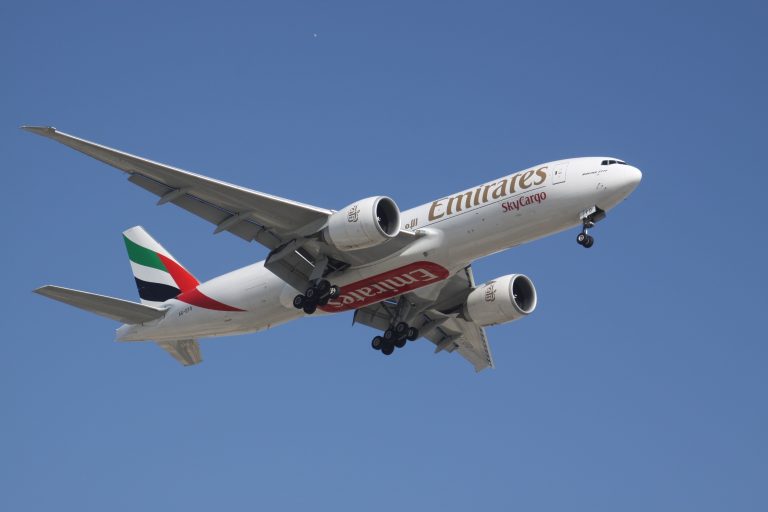
Image: Emirates SkyCargo Boeing 777F – photo by Aeroprints.com, CC BY-SA 3.0.