Published: 2026-08-13
On 2026-08-13 Abu Dhabi National Energy Company (TAQA), one of the largest listed integrated utilities in the EMEA region, reported first-half 2026 net income of AED 4.1 billion, up 9.7% from AED 3.7 billion a year earlier, and approved a second-quarter interim dividend of 0.8 fils per share, a payout of about AED 899 million. EBITDA rose 7.7% to AED 11 billion, while capital expenditure jumped 38% to AED 7.2 billion. Revenue eased 2.6% to AED 27.5 billion, yet profitability still improved, driven by the regulated transmission and generation businesses. The ADX-listed group, backed by the Abu Dhabi government through ADQ, is effectively funding a record build-out of UAE power and water infrastructure from its own cash flows and still paying shareholders mid-year.
What TAQA announced
TAQA published its results for the six months ended 30 June 2026 on 2026-08-13, together with the board’s approval of the interim dividend. CEO Jasim Husain Thabet summed up the half simply: “TAQA has delivered a strong first half of the year, with growth across our utilities businesses driving higher earnings.”
The headline figures for H1 2026:
| Indicator | H1 2026 | Change |
|---|---|---|
| Net income (attributable) | AED 4.1 billion | +9.7% year on year |
| EBITDA | AED 11 billion | +7.7% year on year |
| Revenue | AED 27.5 billion | -2.6% year on year |
| Capital expenditure | AED 7.2 billion | +38% year on year |
| Free cash flow | AED 4.6 billion | vs AED 7 billion in H1 2025 |
| Q2 interim dividend | 0.8 fils per share | about AED 899 million in total |
Revenue down, profit up: how that works
The 2.6% revenue decline looks odd next to a 9.7% profit increase until you look at where it came from. Management attributed the top-line dip to three factors: lower pass-through revenues at TAQA Distribution, which are billed to customers at cost and carry no margin; planned maintenance at the Shuweihat 1 power plant; and reduced oil and gas output following the decommissioning of the group’s UK North Sea assets, a legacy business TAQA has been deliberately winding down.
None of those touches the core earnings engine. The regulated transmission and distribution networks and the contracted generation fleet earn stable, availability-based returns that do not depend on commodity prices. When low-margin pass-through volumes shrink while regulated returns grow, revenue can fall and profit can rise at the same time, which is exactly what the H1 2026 numbers show. It is the profile of a maturing utility, not a shrinking one.
Where the AED 7.2 billion of capex is going
The more forward-looking number in the release is capital expenditure: AED 7.2 billion in six months, up 38% year on year. The pipeline behind it reads like a map of the UAE’s next decade of infrastructure:
- the Taweelah C independent power project, a 2.6 GW gas-fired plant in which a TAQA-led consortium holds a 60% stake;
- a 27-year utilities agreement with ADNOC to supply the TA’ZIZ Industrial Chemicals Zone in Ruwais;
- a new wastewater treatment project in Ras Al Khaimah with a daily capacity of 60,000 cubic metres;
- renewable growth through Masdar, including the acquisition of a Spanish portfolio for EUR 849 million and a USD 2.2 billion joint venture with TotalEnergies;
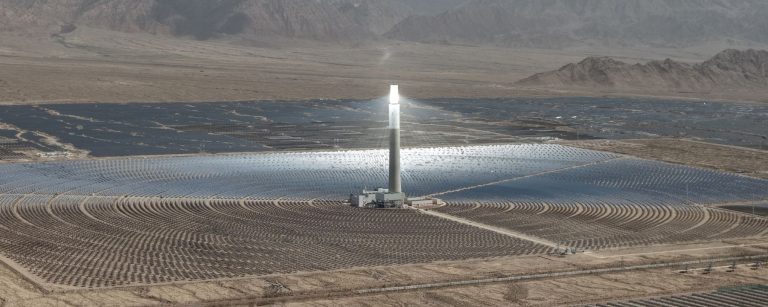
- a USD 870.75 million green bond issued to refinance the Al Dhafra Solar PV plant, one of the world’s largest single-site solar farms.
Free cash flow of AED 4.6 billion, down from AED 7 billion a year earlier, reflects that acceleration: the group is deliberately reinvesting more of what it earns. Even so, the dividend was approved on schedule, continuing the quarterly rhythm TAQA has kept through 2026.
The bigger picture: UAE utilities as an investment story
TAQA’s report lands in the middle of a results season in which UAE infrastructure names have posted strong earnings and paid interim dividends almost in unison. A day earlier Dubai’s DEWA reported a record half with AED 3.33 billion in profit and confirmed AED 3.1 billion in dividends, as we covered in our review of DEWA’s record H1 2026 results. Add Tabreed’s mid-year payout and the pattern is hard to miss: the Abu Dhabi Securities Exchange and Dubai Financial Market are turning into genuine income markets, where regulated utilities distribute cash on a predictable calendar.
For the wider economy the signal matters even more. Electricity, water, cooling and wastewater capacity are the physical ceiling on how fast Abu Dhabi and Dubai can add residents, factories, data centres and hotels. A 38% increase in utility capex, funded from operating cash flow rather than government grants, means that ceiling keeps rising, which is precisely what sustains the UAE’s growth in population and foreign investment.
What this means for businesses and investors
Practical takeaways from TAQA’s half-year report:
- UAE power and water infrastructure is expanding on schedule, so companies planning factories, data centres or large facilities can expect grid and utility capacity to be there when they need it;
- regulated utility returns are proving resilient even as commodity-linked revenues decline, confirming the defensive quality of UAE infrastructure stocks;
- dividend investors gain another data point: TAQA pays quarterly, and the Q2 2026 instalment alone returns about AED 899 million to shareholders;
- the green bond and the Masdar transactions show that international capital markets remain wide open for UAE energy issuers;
- foreign investors who want direct exposure need ADX market access, a brokerage account and typically a UAE bank account for settlement and dividends.
How Atlant Capital can help
Atlant Capital helps entrepreneurs and investors build a presence in the UAE, from choosing the right jurisdiction to a fully operating business. If the strength of Abu Dhabi’s utility sector has you looking at the Emirates, we handle company registration in mainland and free zones and assist with corporate and personal bank account opening, the practical prerequisite for operating or investing through UAE markets. We follow corporate and regulatory news in the Emirates daily, so our clients make decisions on current facts rather than last year’s assumptions.
The takeaway: TAQA earned AED 4.1 billion in six months, lifted EBITDA to AED 11 billion, raised investment by 38% and still handed shareholders AED 899 million. When a country’s utilities can fund record expansion and quarterly dividends at the same time, that is the strongest kind of evidence that the underlying economy keeps growing.
Source: Gulf News.
FAQ
What were TAQA’s H1 2026 financial results?
For the six months ended 30 June 2026 TAQA reported net income attributable to shareholders of AED 4.1 billion, up 9.7% year on year, EBITDA of AED 11 billion, up 7.7%, and revenue of AED 27.5 billion, down 2.6%. Capital expenditure rose 38% to AED 7.2 billion and free cash flow was AED 4.6 billion.
What dividend did TAQA approve for Q2 2026?
TAQA’s board approved a second-quarter interim dividend of 0.8 fils per share, a total distribution of about AED 899 million. The payment continues the quarterly dividend rhythm the ADX-listed utility has maintained through 2026.
Why did TAQA’s revenue fall while profit grew?
Revenue slipped 2.6% because of lower pass-through revenues at TAQA Distribution, planned maintenance at the Shuweihat 1 power plant and reduced oil and gas output after the decommissioning of UK North Sea assets. Those items carry little or no margin, while the regulated transmission and generation businesses that drive profit kept growing, so net income still rose 9.7%.
What major projects is TAQA investing in during 2026?
TAQA’s AED 7.2 billion first-half capex supports the 2.6 GW Taweelah C power project, a 27-year utilities agreement with ADNOC for the TA’ZIZ Industrial Chemicals Zone, a 60,000 cubic metre per day wastewater plant in Ras Al Khaimah, and renewable growth through Masdar, including a EUR 849 million Spanish portfolio and a USD 2.2 billion joint venture with TotalEnergies.