12 September 2026
The Abu Dhabi Investment Office (ADIO) and the German group Bayer have signed a strategic Memorandum of Understanding covering health, life sciences, food security, philanthropy and innovation ecosystems, announced by the Abu Dhabi Media Office on Saturday 12 September 2026 and signed during the state visit of UAE President His Highness Sheikh Mohamed bin Zayed Al Nahyan to Germany on 9 to 11 September 2026. The document names no investment figure, no deadline and no binding obligation: in its own words it “establishes a framework to explore collaboration” and “provides a basis for both organisations to identify and explore opportunities”. What it does carry is a destination. The agreement feeds two ADIO economic clusters that do come with numbers: HELM, launched on 15 April 2025 and projected to add more than AED 94 billion to Abu Dhabi GDP, attract over AED 42 billion of investment and create about 30,000 jobs by 2045, and AGWA, launched on 9 June 2024 with targets of AED 90 billion of incremental GDP, more than 60,000 jobs and AED 128 billion of investment by the same year.
What exactly was signed
The MoU was signed by Mohammad Ali Al Kamali, Chief Trade and Industry Officer at ADIO, and Matthias Berninger, Executive Vice President and Head of Public Affairs, Sustainability and Safety at Bayer. The signing was witnessed by His Excellency Mohammad Abdulrahman Alhawi, Undersecretary of the UAE Ministry of Investment, and His Excellency Hamad Sayah Al Mazrouei, Undersecretary of the Abu Dhabi Department of Economic Development. The seniority of the witnesses is the clearest signal in the announcement: the Ministry of Investment and Abu Dhabi economic development stood behind a corporate framework, which usually means the emirate intends to build follow up instruments on top of it.
Four areas of collaboration are named in the release:
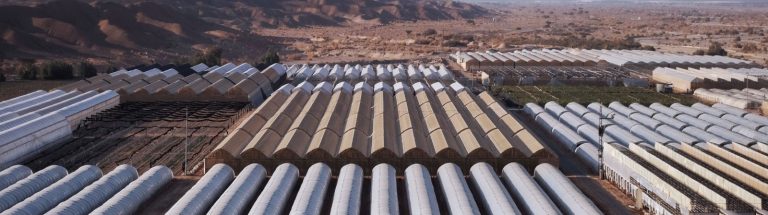
- agriculture and food security, including potential field trials to understand crop performance in desert and arid conditions;
- healthcare innovation and access to advanced therapies;
- health and food security philanthropy, including healthcare access;
- engagement with the Abu Dhabi innovation ecosystem, including research institutions, accelerators and technology programmes.
Read the verbs before you read the headline
News coverage of the agreement moves quickly to the words strategic and Bayer. The operative language of the release is deliberately softer, and the difference matters to anyone planning around it.
| Wording in the official release | What it commits to |
|---|---|
| “establishes a framework to explore collaboration” | An agreed channel for talks. No project, no budget. |
| “provides a basis to identify and explore opportunities” | Pipeline building. Each opportunity still needs its own contract. |
| “including potential field trials” | Trials are an intention, not a scheduled programme. No site and no start date are named. |
| “aim to strengthen knowledge exchange and build connections” | Knowledge transfer and introductions, which is what ADIO clusters are designed to do. |
| “supports the development of the HELM and AGWA clusters” | The agreement is routed into two existing programmes with published targets. |
None of this makes the MoU empty. It makes it an entry point rather than a transaction, and it tells a company in the UAE where to look next: at the clusters, not at the press release.
HELM and AGWA: the programmes behind the agreement
ADIO builds economic clusters as long horizon industrial programmes with published GDP, investment and employment targets. Bayer has been attached to the two that match its business.
| ADIO cluster | Launched | Targets by 2045 |
|---|---|---|
| SAVI, Smart and Autonomous Vehicle Industries | 2023 | Commercialisation of future mobility platforms, including electric vertical take off and landing aircraft |
| AGWA, AgriFood Growth and Water Abundance | 9 June 2024 | AED 90 billion of incremental GDP, more than 60,000 jobs, AED 128 billion of investment |
| HELM, Health, Endurance, Longevity and Medicine | 15 April 2025 | More than AED 94 billion of GDP, more than AED 42 billion of investment, about 30,000 jobs |
HELM was approved by His Highness Sheikh Khaled bin Mohamed bin Zayed Al Nahyan, Crown Prince of Abu Dhabi, and is run jointly by the Abu Dhabi Department of Economic Development, ADIO and the Department of Health Abu Dhabi. It was launched at Abu Dhabi Global Health Week 2025 and covers research, development, manufacturing and commercialisation of biotechnology, new medicines, medtech and digital health. AGWA, approved by the same Crown Prince and led by the Department of Economic Development together with ADIO, targets alternative proteins, functional ingredients, algae, farming and reverse osmosis membranes.
The physical side of HELM is already moving. The Department of Health Abu Dhabi, ADIO and Masdar City signed an agreement to build health and life sciences laboratories inside Masdar City, structured around four pillars: laboratory infrastructure, programmes to attract researchers and start ups, talent development with universities, and translating research into economic value through industry sponsored research and clinical trials. Masdar City already hosts a free zone cluster of biotechnology and genomics companies, which is the practical address behind the word ecosystem. If you are weighing where to place a research entity, that choice sits in the same decision tree as mainland versus free zone in the UAE.
Who Bayer is, in numbers
Bayer reported group sales of EUR 45,575 million in 2025, up 1.1% adjusted for currency and portfolio effects and down 2.2% as reported, with currency headwinds of EUR 1,742 million. Crop Science accounted for EUR 21,622 million, Pharmaceuticals for EUR 17,829 million and Consumer Health for EUR 5,802 million. The group employed 88,078 people at 31 December 2025, down 5.1% from 92,815 a year earlier, as its restructuring programme continued. This is the relevant context for Abu Dhabi: a company running a cost reduction cycle is selective about where it opens new fronts, and it tends to enter through partnerships and trials rather than greenfield capital.
Bayer is not new to the region
The desert crop trials line reads as a first step only if you start counting this week. Bayer has been running agricultural work in the UAE with Silal, the Abu Dhabi food and agriculture company established in 2020, since December 2023. On 9 December 2024 the two signed an expanded Memorandum of Understanding at the World Agri-Tech Innovation Summit in Dubai, setting a programme that runs through 2028 across four workstreams: digital farming solutions, the ForwardFarming demonstration model, agricultural capacity building and traceability, and vegetable seed trials to identify crops better suited to local growing conditions. A potential ForwardFarming demonstration site was flagged for Silal Innovation Oasis.
The ADIO release does not mention Silal, so the two tracks should be treated as separate documents rather than one continuing story. The practical point stands: there is an existing base of seed trial data and local agronomy work in the emirate, which is exactly the asset a new framework agreement is meant to scale.
Where this sits in the state visit package
The MoU is one item inside a much larger week. During the same visit the UAE announced an investment package of EUR 40 billion in Germany and welcomed the signing of 29 business to business agreements worth more than EUR 9.356 billion, which we covered in detail in our report on the EUR 40 billion UAE investment package in Germany. The joint declaration issued by the two leaders singled out food security and sustainable agriculture as a field for bilateral engagement, naming modern agriculture, agricultural value chains, agri technologies and key inputs such as fertilizers. Bilateral non oil trade reached USD 15.5 billion in 2025, more than 14% above 2024.
One dated item in the same declaration is worth putting in the calendar now: the 2026 United Nations Water Conference, co hosted by the UAE and Senegal, will be held in Abu Dhabi from 8 to 10 December 2026. For the water half of AGWA that is the concrete event of the year, and it is the moment when water technology procurement conversations in the emirate tend to concentrate. The Gulf has been moving capital into this area for some time, as we set out in our piece on Gulf water security and desalination.
What changes for a company in the UAE right now
Directly, nothing in the rulebook. An MoU between a government investment office and a foreign corporate is not a regulation, and this one does not touch any procedure a business runs day to day:
- licensing and activity codes are unchanged, in every free zone and on the mainland;
- corporate tax and VAT treatment is unchanged, including for pharmaceutical and agricultural goods;
- customs classification and import rules for seeds, crop inputs and medicines are unchanged;
- visa and residency processes are unchanged, including for researchers and specialists;
- no grant window, tender or application portal was opened by this agreement.
What already exists and can be used today is a different list. The ADIO Innovation Programme is an AED 2 billion fund for research, development and innovation across priority sectors that explicitly include agritech and health services and biopharma. Masdar City free zone offers laboratory space and a biotech and genomics community. Hub71 runs the start up side of the same ecosystem, including its Initiate programme for idea stage founders. These are the doors that were open before the MoU and remain the realistic route in for a mid sized company.
Who should be paying attention
- Agritech, seed and controlled environment agriculture companies. Desert crop performance data is the scarce commodity in this market, and trial programmes generate procurement around them: greenhouses, irrigation, sensors, substrates, laboratory services.
- Pharmaceutical distributors and clinical research organisations. HELM explicitly targets industry sponsored research and clinical trials in the new Masdar City laboratories.
- Food producers and importers. AGWA is a food security programme first: local production capacity is a policy goal, which over time shifts sourcing preferences.
- Investors in laboratory, greenhouse and cold chain infrastructure. Cluster targets are stated in investment attracted, not only in GDP, and that investment has to be built by someone.
- Professional service firms. Every trial, laboratory and joint venture needs an entity, a licence, visas and a bank account before the science starts.
What to watch next
- definitive agreements that convert the framework into named projects, with parties and budgets;
- a named field trial site and a start date, which would turn potential trials into a programme;
- the opening of the HELM laboratories in Masdar City and their access terms for external companies;
- the next Abu Dhabi Global Health Week and the ADIO cluster announcements that usually accompany it;
- the United Nations Water Conference in Abu Dhabi on 8 to 10 December 2026.
How Atlant Capital can help
If you are looking at Abu Dhabi because of the life sciences or agri food agenda, the work starts well before any cluster conversation. We handle company setup in the UAE, including the choice between a mainland licence and a free zone such as Masdar City, activity selection for research, trading and manufacturing, and the corporate structure that lets a foreign parent hold a UAE research entity cleanly. We open corporate bank accounts for newly licensed companies, and we arrange work visas and residency for founders, scientists and technical staff. We do not promise access to government programmes and we do not sell expectations built on a memorandum. We build the legal and operational base that makes a company eligible to have the conversation at all.
Conclusion
Read strictly, the ADIO and Bayer agreement is a framework to explore, signed at a political moment that guaranteed it attention. Read in context, it is another corporate name attached to two Abu Dhabi programmes that already carry public targets of AED 94 billion and AED 90 billion of GDP contribution by 2045 and a combined 90,000 jobs. Nothing in it changes a licence, a tax position or a customs code this week. For companies in agritech, pharma and food, it is a signal about where the emirate is putting its industrial attention, and the practical entry points to that agenda, the ADIO Innovation Programme, Masdar City and Hub71, were open before the signature and are open now.
FAQ
What did ADIO and Bayer actually sign?
A strategic Memorandum of Understanding, announced on 12 September 2026 and signed during the UAE President’s state visit to Germany on 9 to 11 September 2026. It establishes a framework to explore collaboration in health, life sciences, food security, philanthropy and innovation ecosystems. The official release names no investment amount, no timeline and no binding commitment, and describes field trials of crops in desert conditions as potential rather than scheduled.
What are the HELM and AGWA clusters?
They are two of ADIO’s economic clusters. HELM, Health, Endurance, Longevity and Medicine, was launched on 15 April 2025 and is projected to add more than AED 94 billion to Abu Dhabi GDP, attract more than AED 42 billion of investment and create about 30,000 jobs by 2045. AGWA, AgriFood Growth and Water Abundance, was launched on 9 June 2024 with targets of AED 90 billion of incremental GDP, more than 60,000 jobs and AED 128 billion of investment by 2045.
Does this agreement change any rule for companies in the UAE?
No. Licensing, corporate tax, VAT, customs classification and visa procedures are unchanged, and the agreement opened no grant or tender window. The programmes that a company can actually apply to already existed: the ADIO Innovation Programme, an AED 2 billion fund covering agritech and biopharma among other sectors, the Masdar City free zone with its laboratory infrastructure, and Hub71 for start ups.
Was Bayer already operating in the UAE before this MoU?
Yes. Bayer has worked with Silal, the Abu Dhabi agri food company founded in 2020, since December 2023, and on 9 December 2024 the two signed an expanded Memorandum of Understanding in Dubai covering a programme through 2028: digital farming, the ForwardFarming demonstration model, capacity building and traceability, and vegetable seed trials. That track is separate from the ADIO agreement and is not mentioned in the ADIO release.