2026-08-05
DP World, the Dubai-headquartered global ports and logistics group, announced in early August 2026 that it will build a new temperature-controlled logistics hub in the Port of Antwerp, Belgium. The facility will occupy an 83,000 square metre site next to the company's Antwerp Gateway container terminal and will combine more than 55,000 square metres of specialised warehousing with direct access to deep-sea berths and multimodal rail, barge and road connections. The initial investment is €48 million, with further phases expected to take the total to around €100 million. Construction is scheduled to start in the second quarter of 2027, and the hub is expected to be operational in the second quarter of 2028. The project is being developed in partnership with logistics real estate specialist Montea and Maatschappij Linkerscheldeoever (MLSO), the public landowner on the left bank of the Scheldt. For businesses trading through the UAE, it is another reminder that Dubai's port operator is not just a Gulf story: it is building the cold chain infrastructure of European trade.
What exactly DP World is building in Antwerp
The new hub is a purpose-built, temperature-controlled logistics centre rather than a conventional dry warehouse. According to the announcement, roughly half of the capacity will be dedicated to perishables and fresh produce, including bananas and other fruit arriving through Antwerp's deep-sea services. The remainder will serve healthcare, pharmaceuticals and other industries that depend on strict temperature control and full traceability from vessel to final delivery.
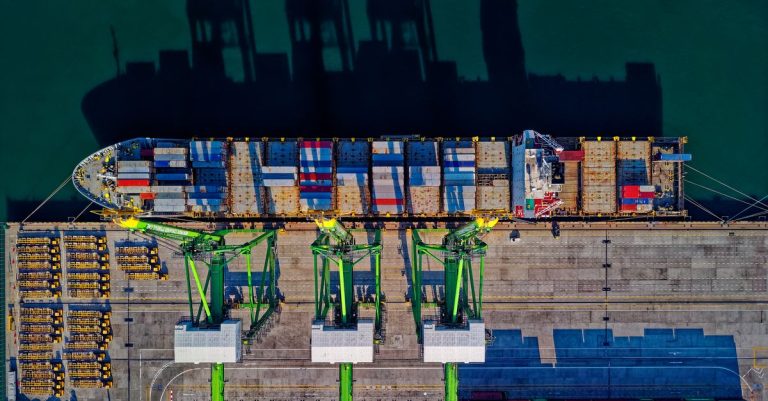
Location is the point of the design. The site sits directly beside Antwerp Gateway, DP World's flagship container terminal in Belgium, which means refrigerated containers can move from ship to specialised storage without leaving the port perimeter. The facility will plug into the terminal's rail and barge connections, giving cold chain cargo owners a single integrated route from quay to European distribution networks. That combination, port terminal plus adjacent specialised warehousing under one operator, is exactly the "integrated logistics" model DP World has been rolling out worldwide.
Antwerp Gateway: twenty years of Dubai investment in Belgium
The cold chain hub lands on prepared ground. Antwerp Gateway opened in 2005, and in late 2025 the terminal marked its twentieth anniversary while completing a separate €230 million expansion programme that added berth capacity, new quay cranes and electrified equipment. The new €100 million commitment therefore extends a two-decade investment story rather than starting one, and it deepens the role of Antwerp, Europe's second-largest port, as DP World's north-western European anchor.
The Antwerp project also widens a European logistics footprint that already spans seven countries: Belgium, Germany, France, the Czech Republic, Romania, Serbia and Switzerland. Add the group's terminals in London Gateway, Rotterdam and Constanta, and the network puts a Dubai-headquartered operator at most of the key gateways into the European market.
Why cold chain, and why now
Cold chain logistics is one of the fastest-growing and most defensible segments of the industry. Pharmaceuticals, biotech products, fresh produce and premium food all require certified temperature-controlled handling, and capacity in northern Europe is tight. By building specialised infrastructure next to its own terminal, DP World captures higher-value cargo flows that ordinary container yards cannot serve, and locks in customers for whom switching providers is costly and risky.
For the UAE, the strategic logic runs deeper. DP World, majority-owned by the Dubai government, operates ports, terminals and logistics parks across six continents. Every specialised facility added to that network increases the value of routing trade through the group's ecosystem, which begins at Jebel Ali in Dubai, the largest port between Rotterdam and Singapore. The Antwerp hub follows the same playbook as the group's recent moves at home, including the 50-year concession for two Fujairah ports signed earlier this year: control the critical nodes, integrate them, and make the network indispensable to shippers.
What the Antwerp hub means for UAE-based traders
A stronger DP World cold chain in Europe has practical consequences for companies that trade through the Emirates:
- Better routes for perishables and pharma. Exporters moving food, agricultural produce or temperature-sensitive healthcare products between Asia, the Gulf and Europe gain a certified cold chain gateway on the continent, connected to the same operator that runs their UAE port of departure.
- One operator from Jebel Ali to the Scheldt. Integrated booking, tracking and handling across a single network reduces handover risk, the main source of spoilage and insurance claims in cold chain trade.
- Re-export economics improve. The UAE's role as a re-export hub for food and pharmaceuticals is reinforced when its flagship operator controls specialised capacity at both ends of the corridor.
- A signal about sector demand. DP World is investing €100 million because cold chain volumes are growing structurally. Trading companies in food, agri-commodities and healthcare distribution are on the right side of that trend, and the UAE is actively courting them with free zone licences tailored to commodity trade.
- Timeline certainty. With construction starting in Q2 2027 and operations in Q2 2028, businesses can plan European distribution strategies around the new capacity now.
The bigger picture: UAE capital in global trade infrastructure
The Antwerp announcement is part of a consistent pattern. In 2026 alone, DP World has committed to new port concessions in Fujairah, truck fleets for Gulf land transport and logistics capacity across three continents. The group's strategy of owning the physical layer of global trade mirrors what the UAE is doing at the national level: turning geographic position and capital into permanent leverage in supply chains. For international businesses, that makes the Emirates more than a market. It is a platform whose infrastructure reaches into Europe, Africa and Asia, and companies incorporated in the UAE sit at the centre of that network.
How Atlant Capital can help
If your business trades in food, pharmaceuticals or other cargo that moves through networks like DP World's, the UAE is a natural base, and setting it up correctly matters. Atlant Capital advises on company setup in UAE free zones and on the mainland, including zones built for trading and logistics businesses such as JAFZA and Dubai CommerCity. We support corporate bank account opening with UAE banks experienced in trade finance, and we arrange residence visas for owners and key staff. From licence to first shipment, we handle the administrative layer so you can focus on the trade itself.
Conclusion
An 83,000 square metre site, more than 55,000 square metres of specialised warehousing, up to €100 million of investment and a launch planned for the second quarter of 2028: DP World's Antwerp cold chain hub is a concrete, dated commitment to owning the high-value end of European logistics. It extends twenty years of Dubai investment in Belgium, widens a European network that already covers seven countries, and strengthens the corridor that begins at Jebel Ali. For companies choosing where to base their trading operations, the message is clear: the UAE's trade infrastructure does not stop at the Gulf, and businesses anchored in the Emirates trade on a network that now reaches deep into Europe.