2026-07-25
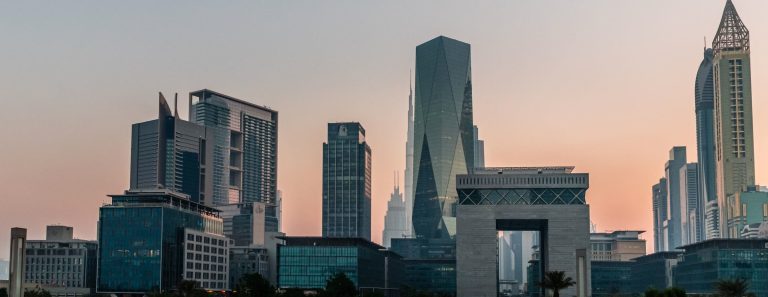
Blackstone, the world's largest alternative asset manager with roughly $1.35 trillion under management, is preparing to open an office in the Dubai International Financial Centre (DIFC). Reuters reported the plan on 24 July 2026, citing people familiar with the matter; Blackstone said it does not comment on speculative reports. If it proceeds, the move returns the firm to Dubai about six years after it shifted its Gulf base to Abu Dhabi, and it does so without closing the Abu Dhabi office. For anyone building a business around the UAE, the signal is bigger than one lease: the largest pool of private capital in the world is treating Dubai as a place it needs to sit in again.
What was actually reported, and what was not
The reporting is clear on direction and thin on mechanics. Blackstone plans a DIFC presence as part of a wider Gulf expansion. What has not been confirmed publicly: an opening date, the DFSA licence category, headcount, the amount of capital behind it, or who would lead the Dubai desk. There is no press release from the firm, and its only public comment is a refusal to discuss the report.
That distinction is worth keeping. This is a credible, well-sourced plan rather than a signed announcement, and the honest way to read it is as intent from an institution whose intent usually converts into activity. Anyone making a decision on the back of it should plan for the trend, not for a specific opening date.
Why Blackstone left, and why coming back reads differently
Blackstone moved its regional base to Abu Dhabi in 2019, at a point when the capital was building out ADGM and courting global managers with proximity to the sovereign wealth funds that anchor Gulf allocations. That logic has not disappeared. Abu Dhabi still houses the cheque writers, and Blackstone is keeping its office there.
What changed is Dubai. Since 2020 the emirate has run an unusually strong cycle: population growth, residency reform including the Golden Visa and remote-work permits, no personal income tax, a deep real estate market and a legal wrapper in DIFC built on English common law with its own courts and its own regulator. The result is a city that now holds the operating teams, the family offices and the deal originators, even when the capital allocation decision is made an hour and a half down the road in Abu Dhabi.
So the return is not a swap. Keeping Abu Dhabi and adding Dubai is the two-hub model most large managers in the Gulf have converged on: capital relationships in the capital, deal flow and talent in Dubai.
The DIFC numbers behind the move
Blackstone would be joining a centre that is compounding fast. DIFC closed 2025 with 8,844 active registered companies, up 28% year on year, after 2,525 new active registrations, a 39% increase. Its regulated population reached 1,052 firms. The part most relevant to an alternative asset manager grew hardest: more than 500 wealth and asset management companies, up 22% in a single year, including 102 hedge funds, alongside 1,289 family-related entities, up 61%.
The centre's own financials moved with it. DIFC reported combined 2025 revenue of AED 2.13 billion, up 20%, and net profit of AED 1.48 billion, up 28%, with a workforce of 50,200 financial services professionals inside the district.
The first quarter of 2026 did not slow down. DIFC registered 775 new companies in the three months to March, against 478 in the same period of 2025, a 62% jump, plus 158 foundations, more than double the prior year, and a 21% increase in financial services authorisations. Names that landed in that quarter include Janus Henderson Investors, National Bank of Canada, Braemar Securities, Arrowpoint Investment Partners, Prospera Wealth Management and Ryan Specialty. Blackstone's reported plan fits a pattern rather than breaking one.
Blackstone's Gulf track record
The office story makes more sense against what the firm has already been doing in the region:
- September 2025: together with Permira, a $525 million minority stake in Dubai's Property Finder, with early backer General Atlantic taking a partial exit while remaining a significant shareholder.
- March 2026: Blackstone led a $250 million investment into ADGT, an Abu Dhabi headquartered payments and compliance infrastructure platform.
- April 2026: Blackstone Credit and Insurance and Dubai Aerospace Enterprise launched Equator, a long-term aircraft leasing investment programme targeting roughly $1.6 billion of deployment a year, with DAE sourcing and managing the fleet.
- 2026: the firm has been reported as a bidder for a stake in Kuwait Petroleum Corporation's oil pipeline network.
Real estate, credit, technology and infrastructure, all inside eighteen months. A Dubai desk is the logistics that follow that deal flow, not a bet placed before it.
What this means for companies working with the UAE
Three practical readings, in order of usefulness.
Capital is getting closer. When global managers place origination teams in Dubai, the mid-market feels it within a year or two: more local mandates, more co-investment, more appetite for regional platforms rather than one-off assets. Businesses with UAE revenue and clean reporting become investable to a set of buyers that previously screened the region from London or New York.
Compliance expectations rise with the capital. Institutional money underwrites governance before it underwrites growth. Audited financials, a defensible corporate structure, substance in the jurisdiction you claim and a banking trail that matches your invoices stop being paperwork and start being valuation. Companies that treat the Corporate Tax return and the annual audit as a formality will be filtered out early.
DIFC is a tool, not a default. The centre is the right home for regulated financial activity, funds, family offices and holding structures that need common law and a strong courts system. It is not the cheapest licence in the country, and for a trading, services or e-commerce business a mainland or standard free zone licence usually does the same job for a fraction of the cost. Choosing DIFC because a headline mentioned it is an expensive way to read the news.
Checklist if you are weighing a DIFC presence
- Define the activity first: regulated financial services, fund, family office or holding structure point to DIFC; trade, services and logistics usually do not.
- Compare total first-year cost against a mainland or free zone alternative, including office requirement, licence, visas and regulatory capital where applicable.
- Check whether your activity needs DFSA authorisation and budget the time it takes, not just the fee.
- Map the banking route before incorporation; account opening timelines drive the launch date more often than the licence does.
- Decide where substance actually sits: management, staff and decision making should match the jurisdiction on the licence.
- Line up audit and Corporate Tax compliance from day one if you expect to raise or sell within three years.
How Atlant Capital can help
We work with founders and investors who need the UAE structure to hold up under scrutiny, not just to exist on paper. That covers company setup across mainland, free zone and financial centre options with an honest cost comparison, residency and visas for the team, and bank account opening planned before incorporation rather than after it. If the financial centre route is what you are considering, our guide to setting up a fintech company in DIFC walks through licence categories and requirements, and our note on Mubadala Capital's tokenised private markets fund covers the same institutional shift from the sovereign side.
Bottom line
A DIFC office for Blackstone is, on its own, one address in a district that added 775 companies in a single quarter. What makes it worth reading is who is moving and in which direction: the largest alternative asset manager in the world sees enough in Dubai to put people there again while keeping Abu Dhabi. For businesses in the UAE, the practical response is not to rush into a DIFC licence, but to get the structure, the reporting and the banking into the shape that institutional capital expects when it finally shows up in the neighbourhood.