2026-07-29
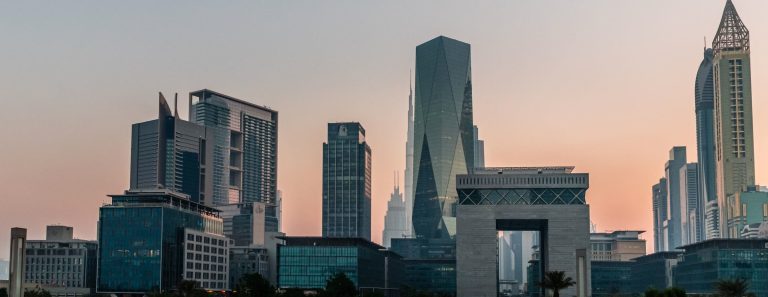
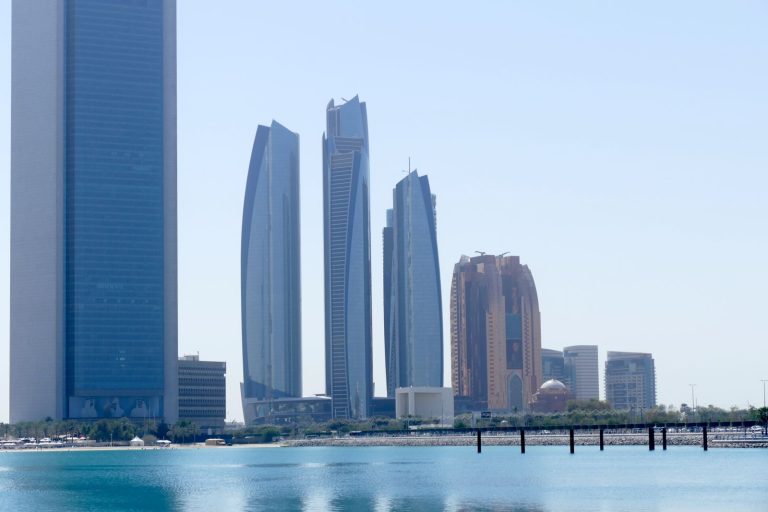
The Dubai International Financial Centre has crossed a threshold no other financial hub in the region has reached: on 28 July 2026 it reported 10,018 active registered companies at the end of the first half of 2026, the first time the number has exceeded 10,000. The Centre added 2,318 new active companies over the past 12 months, organic growth of 30%. The fastest-moving segments tell the story of where Dubai's economy is heading: AI, FinTech and innovation firms grew 39% to 1,933, family-related entities rose 36% to 1,408, and foundations jumped 67% to 1,409. On top of the headline numbers, DIFC announced its ambition to become the world's first AI-Native financial centre, a transformation it expects to generate $3.5 billion (AED 12.9 billion) in economic value and create 25,000 jobs.
The numbers behind the milestone
DIFC's H1 2026 results, announced by the Dubai Media Office on 28 July 2026, show growth across every major segment of the Centre's ecosystem:
- 10,018 active registered companies, up 30% year on year, with 2,318 new companies added over 12 months.
- 1,134 regulated financial services firms, an increase of 16%.
- 327 banks and capital markets firms, 165 insurance and reinsurance entities, and 592 wealth and asset management firms.
- 1,933 AI, FinTech and innovation companies, up 39%, including 361 new arrivals at the DIFC Innovation Hub in H1 2026 alone.
- 1,408 family-related entities, up 36%, and 1,409 foundations, up 67%.
- $4.2 billion in gross written insurance premiums recorded for 2025.
Sheikh Maktoum bin Mohammed bin Rashid Al Maktoum, First Deputy Ruler of Dubai, said the performance reflects the continued confidence that global financial institutions, investors and innovators place in the Centre's legal and regulatory framework, and reinforces DIFC's role in advancing Dubai towards the goal set in the D33 economic agenda: a place among the world's top four financial centres. DIFC currently ranks 7th in the Global Financial Centres Index and first across the Middle East, Africa and South Asia.
Financial services remain the core
Behind the eye-catching totals sits a deep bench of regulated business. The 1,134 regulated firms make DIFC the largest and most diversified financial services cluster in the MEASA region, spanning banking, capital markets, insurance and asset management at scale. DIFC Governor Essa Kazim noted that the Centre continues to attract global institutions, capital and talent seeking access to high-growth markets, and the sector breakdown backs that up: 592 wealth and asset management firms now operate from the Centre, a figure that has been climbing steadily as hedge funds and private capital houses open Dubai offices.
The trend has been visible all year in individual announcements, from established managers expanding their Gulf teams to new arrivals. A recent example we covered in detail: Blackstone's planned return to Dubai with a DIFC office, part of a wave of global asset managers building a permanent Gulf presence.
AI and FinTech, the fastest lane
The most striking growth rate in the report belongs to technology. AI, FinTech and innovation companies reached 1,933, up 39% in a year, and the DIFC Innovation Hub welcomed 361 new companies in six months. That is roughly two new tech firms setting up every working day.
The strategic announcement that came with the results goes further. DIFC intends to become the world's first AI-Native financial centre, embedding artificial intelligence across its regulatory frameworks, business operations, talent development and infrastructure. The Centre estimates this transformation will generate $3.5 billion (AED 12.9 billion) in economic value and create 25,000 jobs. Arif Amiri, CEO of DIFC Authority, said the Centre is seeing strong momentum across every major segment of the financial services industry, and the AI-Native programme is designed to keep that momentum compounding.
For founders in financial technology, the practical takeaway is that DIFC is actively courting them: the Innovation Hub offers subsidised licences and a regulatory sandbox through the DFSA, and the new AI agenda signals that budgets and regulatory attention will keep flowing into the segment.
Family wealth is moving to Dubai
The quieter but equally significant number is 1,408 family-related entities, up 36%, alongside 1,409 foundations, up 67% year on year. Wealthy families from Europe, Asia, Africa and the CIS are using DIFC structures, holding companies, family offices and foundations, to consolidate ownership of global assets under a common-law framework with a dedicated courts system.
The 67% jump in foundations is particularly telling. A DIFC foundation combines features of a trust and a company: it holds assets in its own name, has no shareholders, and follows the founder's charter across generations. For families relocating to Dubai or diversifying away from their home jurisdictions, it has become the default succession vehicle, and the H1 2026 numbers show adoption accelerating.
What the milestone means for businesses entering Dubai
A financial centre passing 10,000 active companies is not just a marketing statistic. For anyone planning a UAE market entry, it changes practical realities:
- Deeper ecosystem: more banks, funds, law firms and advisers within one square kilometre means faster deal-making and easier hiring.
- Regulatory credibility: DIFC's common-law framework and DFSA supervision are recognised by international counterparties, which simplifies cross-border contracts and fundraising.
- Competition among service providers: 30% annual growth attracts new corporate service firms and pushes quality up.
- Clear signal on sectors: AI, FinTech, wealth management and family structures are where the Centre is investing, and where new entrants will find the most support.
DIFC is not the right jurisdiction for every business: licence fees and office costs are higher than in most UAE free zones, and the Centre is built for financial and professional services rather than trading or light industry. The choice between DIFC, other free zones and the mainland depends on your activity, banking needs and target clients. Our guide to company setup in the UAE walks through the decision, and because a licence is only useful with a working account behind it, opening a corporate bank account remains the step where preparation matters most.
How Atlant Capital can help
Atlant Capital helps founders, investors and families establish themselves in the UAE. We advise on jurisdiction selection, DIFC included, handle company formation in free zones and on the mainland, structure holding companies and foundations, and guide clients through corporate bank account opening with documentation prepared correctly from the start. If you are weighing a Dubai entry and want a structure that fits your business rather than a template, contact us for a consultation.
The H1 2026 report, 10,018 active companies, 30% annual growth, a 39% surge in AI and FinTech and a 67% jump in foundations, shows DIFC's growth is still compounding rather than flattening. With the AI-Native programme now official and the D33 agenda targeting a top-four global ranking, the 10,000 mark reads less like a finish line and more like a checkpoint passed at full speed.